Wednesday, April 17, 2019

Review: The Fool's Run

The Fool's Run The Fool's Run by John Camp
My rating: 4 of 5 stars

Listen all y'all, it's a sabotage.

Corporate sabotage, that is.

Kidd is an artist who uses his computer skills to pay the bills that selling paintings won’t cover. He’s also willing to engage in some hacking if the price is right. The wealthy owner of an aviation company approaches Kidd to help him even the score after one of his rival corporations stole a breakthrough piece of technology developed to help sell a new type of jet to the military.

It’s a risky operation that has to be done on a deadline, but the paycheck is a small fortune so Kidd takes the gig. He also recruits some allies to help. His friend/sometime lover LuEllen is a professional burglar who can help him get into the homes of employees for passwords and other info, and Dace is a disgraced journalist who still has the contacts to start smearing the rival company in the media once they throw several monkey wrenches into the works. If they can pull it off they all walk away rich. If not, they might wind up in jail. Or worse.

John Sandford came up with this series at the same time as his Prey novels, and it originally came out in 1989 under his real name John Camp because they were both being published by two different companies who didn’t want to have the same author competing with himself. The Prey series sold better so many more books followed while the Sandford name became the brand. After two books, Kidd would only appear in the Prey series as an unnamed artist until Sandford finally got the full rights back, and once he was a regular best-seller Kidd and LuEllen would return in two more books as well as popping up in the other series now and then.

It’s surprising that this book holds up as well as it does considering it should have several dated aspects. Kidd, like the early version of Davenport in Prey, seems to be constructed as the prototypical ‘80s action/thriller star. He’s a computer expert who is a Vietnam vet that studies martial arts who also engages in shady business. The artist angle makes him a little eccentric, and there’s the added quirk of his using tarot cards as way of spurring outside the box thinking. However, just as he did with Davenport, Sandford manages to keep Kidd grounded and relatable enough that you feel like you’re reading about a smart person with skills, not some completely unrealistic macho asshole.

The other dated element the book manages to skirt is that although a lot of this based on computer hacking circa 1989, it doesn’t read as being ancient. Unlike many a thriller writer in the ‘90s, Sandford always had a knack for incorporating tech of the day and using it for plot points without having people talk about it with wide-eyed awe. While Kidd has to explain some computer stuff and what he’s doing it always seems kind of matter of fact and keeps it a high enough level that the same concepts still apply today.

Overall, this is just a really solid thriller done by a writer early in his fiction career who would go on to become a master at plotting and building tension and momentum. He’s not quite there yet, and the last third of book doesn’t have the same kind of climax you get in his best work.

I’d probably go 3 stars if I just didn’t like Kidd and LuEllen as characters so damn much. Plus, I really appreciate just how deviously clever the sabotage plan is with Kidd being absolutely diabolical in the changes he makes to the company’s computer system coupled with their media campaign to smear it's name. There’s a reason Prey became the more popular series, but there is still fun reading to be had here for Sandford fans.

View all my reviews

Tuesday, April 16, 2019

Review: The Last Stone

The Last Stone The Last Stone by Mark Bowden
My rating: 4 of 5 stars

Even though I’m a huge fan of mystery/crime fiction I’ve long known that I never could have been a cop. One of the main reasons is that if I were faced with a suspect I knew was lying to me that I lack the patience to work the truth out of them with long interrogations. Instead I’d immediately shine a bright light in their eyes and grab the nearest phone book. That was never clearer to me then while reading this book when I found myself gritting my teeth and wishing I could reach through the pages to choke the shit out of this lying asshole.

In the spring of 1975 two pre-teen sisters, Sheila and Kate Lyon, vanished from a suburban Maryland mall just outside of Washington D.C. Despite a huge police investigation and being covered all over local media the girls were never found.

Almost 40 years later a cold case detective was going through the file again and came across something new. Days after the girls disappeared, an 18 year man named Lloyd Welch had given a statement to the police about seeing them talking with a man at the mall and leaving with him in a car. However, Welch’s statement seemed fishy, and he promptly flunked a lie detector test which led to him admitting that it was a combination of things he’d seen in the news and made up. The cops dismissed him as just another attention seeking kook that was wasting their time.

However, this detective noticed that Welch’s statement about the man he claimed to have seen had a detail that matched his prime suspect, a child molester who had died in prison. Believing Welch may know something after all the cops tracked him down only to find that he was serving a long prison term for molesting a young girl. It also turned out that one composite sketch from a witness in the mall at the time looked a lot like Welch at 18.

What began there was a series of long interviews with Welch who they quickly learned seem almost allegoric to telling the truth. When caught in a lie Welch would refuse to admit it, blaming any mistakes on faulty memory brought about by age and drug abuse, while eventually shifting to a completely different story that ignored what he previously said. Or he might backtrack and start repeating a story the police had already discredited. When faced with absolute proof of false statements and finally admitting something he’d say he lied because he was scared and trying to protecting himself.

Pinning Welch down to a story was like trying to nail Jell-O to the wall, and it took a team of detectives working variations on several different tactics for over a year to eventually tease something approaching the truth out of him. This would lead to new directions and other suspects involved in the crime which were mainly members of Welch’s family. They would turn out to be a clan of transplanted hillbillies that seem to be something out of a Rob Zombie movie with child abuse and sexual assault being common place.

Mark Bowen was a young journalist just starting his career when he reported on the missing Lyon sisters, and as he explains the case haunted him for years afterwards. He’s done some interesting things structurally with this because it doesn’t follow your typical true crime format. The story begins with Lloyd Welch and that’s where most of the focus is. There’s not a lot of time spent on the original abduction which is what you’d usually get in a true crime story. Then there’d be some background on the family, the investigation, and the break with Welch might come in at the halfway point. Bowen gives us that as background and essentially starts very early with the cops going to Welch.

That’s because this is mainly about the interviews and how the cops managed to tease and cajole information from Welch when he was feeding them mostly bullshit, and then how they kept him talking long past the point where he realizes that he should just shut up. That makes sense because this case hinges on how they eventually learned to read what Welch was telling them and how to work him. In the end the major break comes not from what Lloyd actually said, but instead from a detective following up on one his lies but realizing that the truth was actually in the other details Welch kept putting in his various stories.

This is an interesting way to do a book like this, and the case is fascinating. However, it can also be frustrating because a great deal of time is spent just reading Welch’s shifting lies and repeated justifications. It also doesn’t end as neatly as an episode of Law & Order. While some justice is done there is still a lot left unanswered and probably some guilty parties will never be charged.

It’s a solid piece of crime true crime writing, but reading about Welch wore me out. I don’t know how the cops who had to actually deal with him could stand it.

View all my reviews

Thursday, April 11, 2019

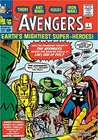
Review: Avengers (1963-1996) #3

Avengers (1963-1996) #3 Avengers (1963-1996) #3 by Stan Lee
My rating: 3 of 5 stars

The Avengers are worried about the Hulk after he quit the team and go looking for him. After yet another battle with his former team, the Hulk flees to a deserted island. There he meets Namor, the Sub-Mariner, who dislikes humanity as much as Hulk does so they decide to join forces. They challenge the Avengers to a fight, and hilarity ensues.

Three issues into this, and the Hulk has fought the other Avengers in every one of them so far. So that’s getting pretty tired already, but the team-up with Sub-Mariner puts a new spin on things. My favorite part was how Hulk and Namor immediately plan to betray and destroy each other the second they beat the Avengers.

Random observations:
• Iron Man has upgraded to a better looking red & gold suit, but the helmet still needs work.
• Wasp’s main role continues to be panting over men, particularly Thor.
• Hulk first fights the Avengers in the American Southwest, and he gets away by hiding in a truck loaded with gravel. That gets dumped in some body of water. Next thing you know the Hulk is in…. the Atlantic Ocean? How far was that truck going to dump a load of rocks into the sea?

Previous Issue: Avengers #2

Next Issue: Avengers #4

View all my reviews

Wednesday, April 10, 2019

Review: Avengers (1963-1996) #2

Avengers (1963-1996) #2 Avengers (1963-1996) #2 by Stan Lee
My rating: 3 of 5 stars

We’re only in the second issue and already Hank Pym has shifted from Ant-Man to Giant-Man, and the Hulk has quit. Things move fast in these early Marvel comics!

An alien creep named the Space Phantom comes to Earth, and starts immediately causing trouble by using his power to imitate someone while sending the original into some kind of limbo. The catch is he can only do one at a time and the other person gets returned which is kind of an interesting twist on the ole shapeshifter thing.

More ‘60s fun with Kirby and Lee.

Random observations:
• I don’t blame Hulk for quitting because all the other Avengers are real jerks to him.
• Wasp continues to be boy crazy.
• It already seems ridiculous that nobody figures out that Tony Stark is Iron Man or that Dr. Donald Blake is Thor.

Previous Issue: Avengers #1

Next Issue: Avengers #3

View all my reviews

Review: Avengers (1963-1996) #1

Avengers (1963-1996) #1 Avengers (1963-1996) #1 by Stan Lee
My rating: 4 of 5 stars

The death of Stan Lee a few months back got me thinking about the old school Marvel comics so I decided to take advantage of my Marvel Unlimited subscription to go back and read some of the oldies.

Loki makes it look like the Hulk is rampaging as part of a plan to trap Thor, but he doesn't count on other heroes like Iron Man, Ant-Man, and the Wasp showing up as well. The good guys win and decide to form a new super-team called Avengers. (Why? Because it's the first name Wasp throws out there, and it sounds pretty cool.)

It's pretty silly compared to modern comics, but there's Jack Kirby art and the hammy charm of Lee's melodramatic prose even if the dated elements like Wasp rhapsodizing about how handsome Thor is while Ant-Man berates her for being a silly woman don't play very well. Nor does a reference to dumping atomic waste in the ocean for disposal, but it was the '60s so why not? Iron Man's clumsy gold suit also looks pretty bad, but I think that improves quickly.

Next Issue: Avengers #2

View all my reviews

Tuesday, April 9, 2019

Review: Black Mountain

Black Mountain Black Mountain by Laird Barron
My rating: 2 of 5 stars

I received a free advance copy from NetGalley for review.

A former Mafia hit man turned private detective hunts down a serial killer who also used to moonlight as a mob hit man? Man, I really wanted to love this book. Sadly, I didn’t.

Isaiah Coleridge was introduced to us in Blood Standard, and to say that his backstory is complex is an understatement. He used to make his home in Alaska where he worked as a top notch killer for the Outfit, but after he had a bloody falling out with one of the bosses Isaiah was exiled to in upstate New York. Determined to leave his old ways behind Isaiah has become a private detective, but he also doesn’t mind jobs where his skills as an enforcer might come in handy. He also has to maintain a delicate relationship with the local mobsters so when one of them comes to him with an ugly job Isaiah is in no position to refuse.

Two of the local thugs have been murdered in gruesome ways, and the boss wants to know if they’re connected and who might be behind it. Isaiah reluctantly begins to check out it out and quickly learns that a legendary hit man long thought retired or dead might be behind it. It also turns out that this guy’s hobby when not killing people for money was killing people for fun. If the mob connections weren’t bad enough it also seems like this man might have ties to the military and there’s some very rich people in the mix as well. Despite his plate being pretty full Isaiah also has taken on a gig trying to protect a local woman from a family of thugs because she's dating the ex of one of them.

Sounds like a lot, doesn’t it? And it is. Frankly, it’s too much. This was my problem with the first book, too. There’s a great concept with an ex-mob hit man trying to kinda go straight but getting tangled up in bloody messes. However, everything has to get so complicated that it all gets bogged down as Isaiah just pinballs from one thing to the next. The core story of an ex-hit man hunting a legendary ex-hit man is great, but the bad guy can’t just be an insane serial killer too. He also has to be wrapped up in a vast conspiracy that is pretty ridiculous so I guess mob killer/serial killer just wasn’t enough.

And that’s kind of the problem to all of it. Barron has good ideas and is a capable writer, but he just never knows when to stop adding layers to the cake and focus on shaping the elements he already has into something edible. Eventually it just collapses on itself from it's own weight. For example, the big subplot in this book is dumped to the back burner and is pretty much resolved with a couple of sentences late in the book as action that we don't see. So it was just a distraction in an already overstuffed book.

There’s the core of a really cool character and series here, but it took too much effort for me to dig it out. More bloody violence and less plot, please.

View all my reviews

Review: Tiamat's Wrath

Tiamat's Wrath Tiamat's Wrath by James S.A. Corey
My rating: 4 of 5 stars

If you’re a fan of this series the very first sentence will break your heart.

Do things get better after that? Let’s see what one of the characters has to say about the possibility of good things happening after bad things:

”Sometimes it’s just one shit sandwich after another.”

Truth.

So yeah, there are a couple of moments in this that absolutely suck if you’re invested in these characters. That’s not to say that all hope is lost, and that there aren’t some good fist-pumping “Hell yeah!” moments. There are plenty, but there is a steep price to pay for them. It’s still worth it though.

That’s pretty much all I have to say about this one. It’s nigh on impossible to talk about the eighth book in a nine book series without spoiling the previous ones so I’m just going to once again urge that any sci-fi/space opera fans try this if they haven’t already. Oh, and the TV show based on it that is now on Amazon Prime is well worth watching, too.

View all my reviews